


 03Mar
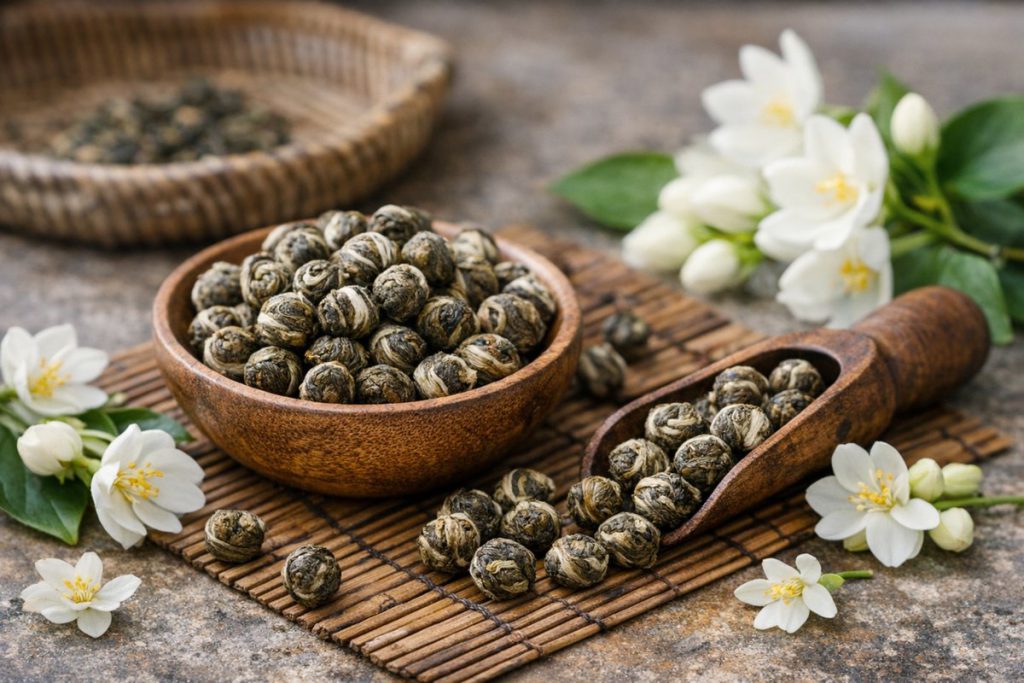
Jasmine Pearls – Why Jasmine Dragon Phoenix Pearl Is the “Premium” Choice
Among Jasmine Teas
There is jasmine tea that simply smells like jasmine. And then there is jasmine
tea that lives with jasmine—gentle and
clean, without a perfumey heaviness, supported by a refined green backbone and
a velvety finish. Jasmine Pearls (Jasmine
Dragon Phoenix Pearl) belong to the second type. The reason isn’t
marketing—it’s technique: the right base of young leaves, hand-rolling, and
scenting with fresh jasmine blossoms in repeated cycles until the fragrance
becomes part of the leaf itself, rather than a mask on top.
At coffeeteahouse.bg,
we offer Jasmine Dragon Phoenix Pearl BIO—an
organic Chinese green tea made from “two leaves and a bud,” hand-rolled into
pearls and scented up to six times with fresh jasmine flowers, certified DE-ÖKO-003.
What Sets True Jasmine Pearls Apart
1) The Base: “Two Leaves and a Bud”
When a tea starts with the youngest tender
leaves, the flavor becomes naturally sweeter, more refined, and “clean.” With
jasmine pearls, this is essential—jasmine should enhance, not dominate. Jasmine Dragon Phoenix Pearl is
explicitly made from only the two youngest leaves and the bud, hand-plucked for
quality.
2) Scenting: A Night Ritual Repeated Many
Times
Traditionally, jasmine tea is scented by
layering tea with fresh blossoms—most often in the evening or at night, when
jasmine flowers open and release their aromatic compounds. After several hours,
the blossoms are removed, the tea is gently dried, and the process is repeated
until the aroma becomes fully integrated.
In Fujian—especially around Fuzhou, an iconic
region for jasmine tea—this scenting technique is so significant that it is
recognized as cultural heritage and a traditional craft.
This is where “up to six scenting rounds” truly matters. It isn’t just
a number; it’s an indicator of depth and
clarity of fragrance. Scientific analyses of jasmine tea discuss how
repeated scenting cycles shape the profile of volatile aromatic compounds and
improve their retention within the leaf.
3) The Shape: A Pearl That Preserves Aroma
Hand-rolling the tea into pearls has a
practical purpose: it helps “seal in” the aromas and release them gradually
during infusion, as the pearls unfurl beautifully in the cup.
In the Cup: What to Expect (Through a Tea
Sommelier’s Lens)
When the pearls are high quality and brewed
correctly, the profile is distinctive:
·
Aroma:
white blossoms, clean jasmine (not perfumey), with a gentle spring-green note
·
Taste:
delicate honeyed sweetness, soft green freshness, a rounded mouthfeel, with no
harsh bitterness
·
Liquor
color: champagne-gold / pale golden
This aligns with the tasting notes described
for the product itself (white blossoms, honey, spring-like freshness).
The Most Common Mistakes (and How to Avoid
Them)
Mistake 1: Water That’s Too Hot
Jasmine pearls are green tea. If you pour
boiling water over them, you’ll extract unnecessary astringency and a sharper,
less elegant jasmine character.
Solution: 75–80°C is a reliable range for a
classic style.
Mistake 2: Brewing the First Infusion for Too
Long
With quality pearls, the aroma is strong and
releases quickly. Steeping too long can make it feel heavy.
Solution: start with 2–3 minutes (classic approach).
Mistake 3: Underestimating the Second and
Third Infusion
Jasmine pearls are designed for multiple
infusions—this is where their quality truly shows.
Solution: plan for 2–3 infusions minimum; the second is
often the most balanced.
How to Brew Jasmine Dragon Phoenix Pearl (Two
Proven Recipes)
Recipe A: Classic (Easy for Everyone)
·
Dose:
3 g (about 1 tsp)
·
Water:
250 ml
·
Temperature:
75–80°C
·
Time:
2–3 minutes
·
Infusions:
2–3
Recipe B: Premium Style (More Intense Aroma,
Silkier Texture)
·
Dose:
4–5 g
·
Water:
150 ml
·
Temperature:
~75°C
·
Time:
90–120 seconds (1st), then 30–60 seconds (2nd/3rd)
This style is popular among tea tasters
because it draws out a fuller aroma without “scorching” the green-tea base. The
logic is the same: controlled temperature + a more concentrated infusion.
How to Recognize Quality Jasmine Pearls When
Buying
Here’s a practical checklist that helps
customers choose well—and understand what makes a tea truly premium:
1.
Whole pearls, not
broken leaf – quality is visible even when dry.
2.
A clean, natural
aroma – an overly “perfumey” smell often indicates a lower-grade base
tea or aggressive scenting.
3.
Multiple
infusions – good pearls develop over successive brews instead of
“dying” after the first cup.
4.
Origin and method
– “two leaves and a bud,” hand-rolling, and repeated scenting with fresh
blossoms are strong markers of high quality.
Who This Tea Is For (and Why It Often Becomes
a Favorite)
·
For those who want a floral tea without heaviness or artificial taste
·
For green tea lovers looking for a softer, more refined profile
·
For gifting: the visual effect of pearls
unfurling is a true wow, without
feeling kitschy
Where to Find It—and How to Choose It
Properly
If you want a jasmine tea that is genuinely
elegant, look for:
·
organic
certification
·
hand-rolled
pearls
·
repeated
scenting with fresh jasmine blossoms
That
is exactly what Jasmine Dragon Phoenix
Pearl BIO is at CoffeeTeaHouse.bg—available
in 50 g / 100 g / 150 g packs.